
Smartwatches in 2026 are redefining the wearables market with models that are more precise, more durable, and better integrated into everyday use, like the Sport. Between affordable options under €300, reliable premium models, and outdoor watches capable of tracking intensive training or multi-day treks, the choice is no longer limited to Apple or Samsung. The real difference lies in smartphone compatibility, sensor quality, screen readability, app management, and actual battery life, far removed from the overly optimistic claims in the specifications.
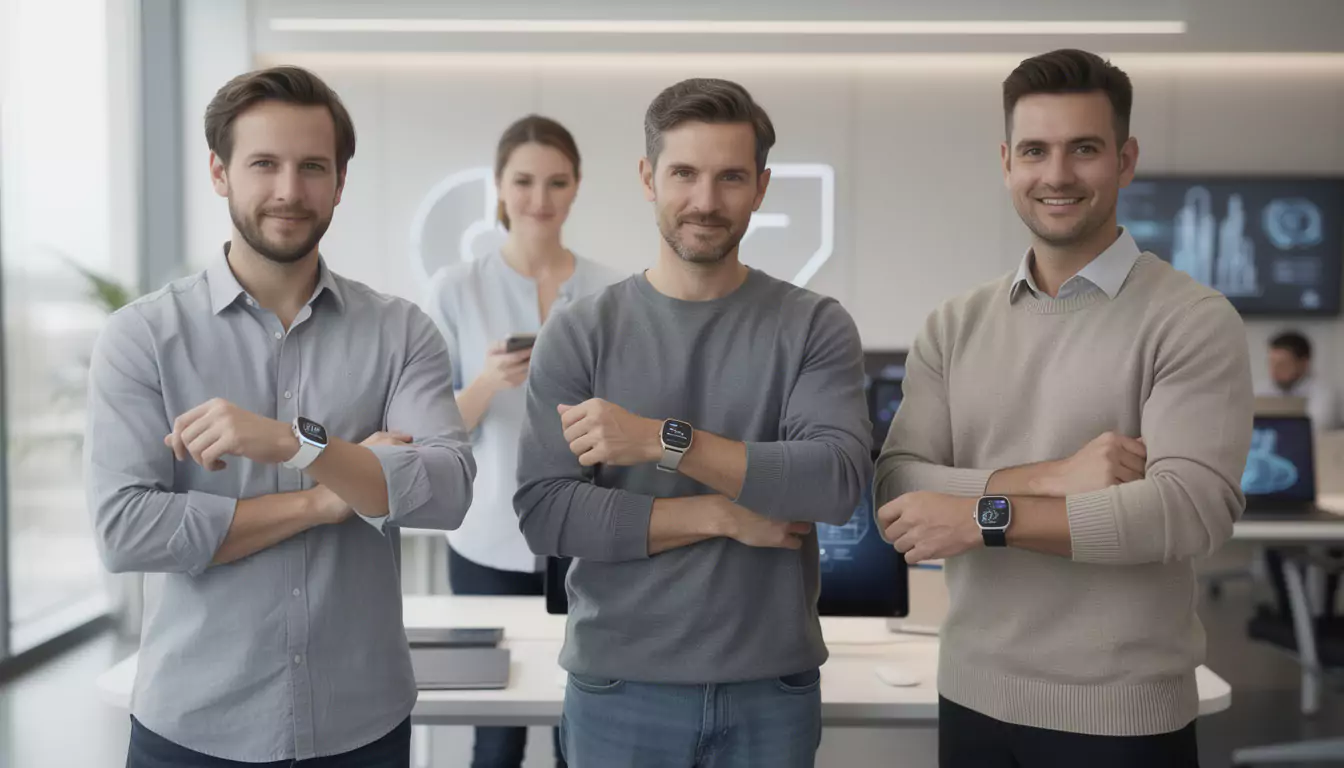
This rapidly evolving landscape is also driving businesses and publishers to rethink wrist-based mobile experiences. Smart notifications, contactless payments, GPS tracking, recovery indicators, embedded AI, and voice assistants are transforming the relationship between users, smartphones, and digital services. In this context, DualMedia has established itself as an expert capable of supporting web and mobile projects that revolve around these new connected uses, whether they involve business applications, e-commerce platforms, healthcare interfaces, or advanced geolocation tools.
Smartwatches in 2026: how to choose based on your budget, smartphone, and intended use
The first selection to make among smartwatches in 2026 seems simple, but is crucial in practice: check the ecosystem. An Apple Watch maintains exemplary integration with the iPhone, while Samsung, Google, and OnePlus make better use of Android and, often, their own services. This point seems obvious, yet it determines access to major features such as ECG, payments, certain health statistics, and rich message replies.
The budget then shapes the level of requirements. Below €300, it's possible to get a bright AMOLED screen, GPS, a heart rate sensor, detailed sleep tracking, and several days of battery life. However, the lack of third-party apps remains common, and the accuracy of the watches is variable. This is the price range where the Amazfit Active 2, the Xiaomi Redmi Watch 5, the Huawei Watch Fit 3, the Apple Watch SE 3, and the Galaxy Watch FE compete for the most diverse user profiles.
The Amazfit Active 2 perfectly illustrates this new generation of smartwatches. For a very competitive price, it offers a metal finish, a convincing screen, and battery life of five to seven days. Its drawback isn't its appearance, but rather its room for improvement in terms of sensors and software ecosystem. Conversely, the Apple Watch SE 3 costs more but offers a more consistent experience for iOS users, with app access, smooth performance, and reliable overall tracking.
For those who prioritize battery life, the Redmi Watch 5 is worth considering. Its large 2.07-inch screen improves visual comfort on a daily basis, and its ten-day battery life addresses a real need: wearing your watch without having to think about charging it every night. The downside is the accuracy of the measurements and the lack of a true app store.
A few practical criteria can help avoid a disappointing purchase:
- Full compatibility with Android or iPhone
- case size suitable for wrist
- presence or absence of an app store
- Actual quality of GPS and heart rate
- battery life with active screen and night tracking
- NFC and Bluetooth calling availability
For a more detailed understanding of Apple practices, see the guide dedicated to Differences between Apple Watch Cellular and GPS This sheds light on a point often misunderstood at the time of purchase. Similarly, special uses benefit from being addressed separately, particularly through this dossier on the smartwatch for runningbecause an elegant model for the office is not always the most relevant for an interval training session.
This first category reveals an important reality: the best choice is not necessarily the most expensive, but the one that best fits the software environment and daily needs.
The actual differences between entry-level and mid-range
Between €250 and €500, smartwatches in 2026 are entering their maturity zone. The difference is no longer just in the materials, but in the overall assembly: smoother operation, more reliable sensors, faster charging, access to the Play Store or the app, and more consistent interfaces. This is where the user gains comfort and convenience day after day.
A busy professional who receives numerous notifications, attends a few workouts a week, and sometimes pays with their watch isn't looking for just a simple screen on their wrist. They expect a credible alternative to their smartphone. This is precisely what the Galaxy Watch 7, Pixel Watch 4, OnePlus Watch 3, and Apple Watch Series 10 aim to provide.
The most innovative and high-performing models: Apple, Samsung, Google, OnePlus and the challengers
The core of the smartwatch market in 2026 hinges on four key areas: interface, accuracy, battery life, and software intelligence. The Galaxy Watch 7 maintains a strong position thanks to its rich interface, beautiful AMOLED display, and significantly improved battery life. In typical use with always-on display and sleep tracking, it can last around 36 hours. While not spectacular compared to some competitors, it's a tangible improvement for Android users.
The OnePlus Watch 3 follows a different strategy. Its ambition isn't just to offer Wear OS, but to address one of its historical weaknesses: the battery. With approximately four days of battery life under heavy use, it takes a significant lead over much of its segment. Its bright screen, access to Play Store, and dual-frequency GPS make it particularly appealing to users who want a versatile tool without constant recharging. However, its size remains considerable, which may exclude some wrists.
Google, for its part, is refining its offering with the Pixel Watch 4. The circular design remains compact and premium, but the real changes lie elsewhere: Wear OS 6 is more fluid, the screen is larger, battery life improves to over two days with mixed use, and Gemini is gradually replacing traditional voice assistant features. This shift is significant. The watch is no longer just a command support tool; it's becoming a contextual access point to AI. Quick search, information summaries, navigation assistance, or interpretation of personal data: the promise is becoming more tangible.
The Apple Watch Series 10 remains a well-balanced product. Its thinner case, very fast charging, and the overall quality of watchOS reinforce its status as a lifestyle benchmark. However, its battery life remains modest for a typical day of use, which shows that Apple continues to prioritize feature density over pure endurance. GPS and heart rate tracking remain excellent for profile updates, although advanced users will notice some limitations with altimetry.
The following table summarizes the major trends in the mid-range and high-end markets:
| Model | Main point fort | Observed autonomy | Ideal profile |
|---|---|---|---|
| Apple Watch Series 10 | iPhone and app integration | about 1 day | versatile iOS user |
| Google Pixel Watch 4 | Wear OS 6 and Gemini AI | more than 2 days | Android user orienté Google services |
| OnePlus Watch 3 | battery life and dual-frequency GPS | about 4 days | heavy use and regular sport |
| Samsung Galaxy Watch 7 | Samsung ecosystem and health features | approximately 36 hours | Samsung smartphone owner |
Beyond the technical specifications, the real progress lies in how these watches integrate into broader digital services. Mapping, contextual recommendations, activity analytics, urban mobility, and mobile commerce all rely on robust software architectures. This is precisely where a partner like DualMedia makes a difference, by designing seamless experiences across watches, mobile application and web platform. This logic becomes even more effective when geolocation is central, a topic detailed in this article on Geolocation for more relevant applications.
The intermediate segment is therefore the most strategic: it is where useful innovation, a high level of finish and a reasonable compromise on price meet.
When embedded intelligence becomes a real criterion
The arrival of more contextual AI tools is changing the hierarchy of expectations. Yesterday, users primarily judged the screen, battery life, and notifications. Today, they also expect analytical capabilities: recovery tracking, sleep summaries, anomaly detection, conversational assistance, and contextualized recommendations. This evolution is bringing the smartwatch closer to a specialized personal assistant.
This trend extends beyond the wearables market alone. It is part of a broader dynamic where hardware is becoming the entry point for intelligent interfaces, as demonstrated by the new applications of hybrid and more discreet devices discussed in this article. the OpenAI Gumdrop hardware projectWatches benefit from this development, as they already have the context, the sensor, and the constant link with the user.
High-end smartwatches for 2026: outdoor, advanced sport, robust and suitable for professional use
Starting at €700, smartwatches in 2026 are undergoing a shift in focus. It's no longer just about displaying notifications or counting steps. These models prioritize durability, readability in direct sunlight, diving, hiking, tracking complex activities, and resistance to demanding environments. Three names dominate this segment: Samsung Galaxy Watch Ultra, Apple Watch Ultra 2, and Garmin Fenix 8. In a more specialized sphere, the Garmin F1Terunner 970, Garmin Venu 4, and Amazfit T-Rex 3 Pro round out a very competitive landscape.
The Galaxy Watch Ultra adopts a hybrid positioning. It incorporates the hallmarks of an adventure watch with a titanium case, 10 ATM water resistance, a very bright screen, and robust construction. Its GPS and heart rate monitoring are significantly improved, but its battery life remains more that of a rugged lifestyle watch than a true ultra-outdoor specialist. For an active weekend, it's perfectly adequate. For longer expeditions, it reaches its limits more quickly.
The Apple Watch Ultra 2 takes a similar approach, with the advantage of a highly refined software ecosystem. Its dual-frequency GPS, responsive heart rate monitoring, depth rating, and thermometer make it a very comprehensive tool. However, it maintains the philosophy of a premium, multifunctional watch, not one designed exclusively for extreme endurance. Its battery life of approximately 60 hours in typical use remains solid, but Garmin continues to widen the gap.
The Fenix 8, in particular, targets a different audience. Its selling point isn't fashion, but strategic endurance. Up to 16 days without tracked activity, 47 hours with GPS enabled, advanced navigation features, storage, NFC, voice assistants, and multiple case options: it meets real-world needs. A consultant who travels frequently, a trail runner tackling long distances, or a field professional doesn't consider a watch a mere accessory. They expect a reliable, legible, robust, and consistent instrument.
In the smartwatch category, other models deserve attention. The Garmin Forerunner 970 excels in GPS and heart rate accuracy, running analysis, and advanced training features. The Amazfit T-Rex 3 Pro offers remarkable durability and a week of intensive battery life at a more affordable price. The Garmin Venu 4 takes a more understated approach, with a more urban design but a wealth of smartwatch and health features.
The choice of high-end products is often decided based on very clear use cases:
- sport intensive with a need for detailed metrics
- hiking or navigation with mapping and good endurance
- Professional field use with calls, payment and location services
- diving, trail running or long-distance cycling with reinforced robustness orcée
For brands, sports clubs, health startups, or service platforms, these watches also open up concrete business opportunities. Data synchronization, training programs, dashboards, alerts, mobile maintenance, or geolocation-based assistance: the wrist becomes a fully-fledged point of interaction. DualMedia specifically supports this type of web and mobile project, with valuable expertise when it comes to connecting sensors, UX and application architecture.
Therefore, top-of-the-range models only make sense if their intended use justifies them. Otherwise, an excellent mid-range model will often perform better in terms of value, simplicity, and everyday usability.
Reliability, comfort and everyday durability
A very feature-rich but overly heavy watch often ends up at the bottom of a drawer. This detail seems secondary on the day of purchase, but it becomes crucial after three weeks of use. Cases measuring 47 to 49 mm offer more battery life and better readability, but they can interfere with sleep, daily activities, or wearing under a shirt cuff. Conversely, a compact watch encourages long-term adoption.
Reliability also depends on the sensors. Glass resistance, strap quality, charging speed, companion app consistency, and clear settings all determine actual satisfaction. A good smartwatch isn't judged solely on technical tests; it's judged on how naturally it integrates into daily life. This threshold of real-world use is what distinguishes merely attractive models from truly relevant products.
Which smartwatches in 2026 offer the best value for money?
The best value smartwatches of 2026 are mostly found in the €100 to €400 price range. The Amazfit Active 2, Xiaomi Redmi Watch 5, Galaxy Watch 7 (currently on sale), OnePlus Watch 3, and Apple Watch SE 3 cater to very different needs depending on the smartphone, expected battery life, and the level of requirements for apps or the device itself.
Are all 2026 smartwatches compatible with iPhone and Android?
No, not all smartwatches in 2026 offer the same compatibility. Apple Watches remain exclusive to iPhones, some Samsung features require a Samsung smartphone, while Huawei, Amazfit, and some Garmin models are more open, although the level of integration varies depending on the mobile ecosystem.
Which smartwatch should I choose for the SPorT among the 2026 smartwatches?
For the 2026 smartwatch market, the most compelling options are those that combine accurate GPS, a reliable heart rate sensor, and good battery life. The Garmin Fenix 8, the Garmin Forerunner 970, the OnePlus Watch 3, and the Apple Watch Ultra 2 stand out depending on whether the focus is on running, outdoor activities, advanced training, or more versatile use.
Has the battery life of smartwatches really improved by 2026?
Yes, the battery life of 2026 smartwatches is noticeably improving across several models. Wear OS watches are becoming more durable, OnePlus is reaching a milestone with several days of use, Google is significantly improving the Pixel Watch, while Garmin remains the benchmark when battery life and outdoor performance are paramount.
Why use DualMedia for connected watches 2026 and mobile projects?
DualMedia can transform the uses associated with smartwatches in 2026 into concrete digital services. The agency supports the design of mobile applications, web platforms, connected interfaces, geolocation tools, and business solutions capable of intelligently leveraging data and interactions from wearables.
Would you like to get a detailed quote for a mobile application or website?
Our team of development and design experts at DualMedia is ready to turn your ideas into reality. Contact us today for a quick and accurate quote: contact@dualmedia.fr