
The 10 best home automation hubs for the connected home in 2026: technical comparison, selection criteria (Matter, Zigbee, Thread, Wi-Fi), installation tips and automation scenarios, with support from DualMedia to integrate home automation into your web and mobile projects.
A home automation hub serves as a point of convergence between sensors, lighting, locks, thermostats and voice assistants, to control a connected home from a single interface.
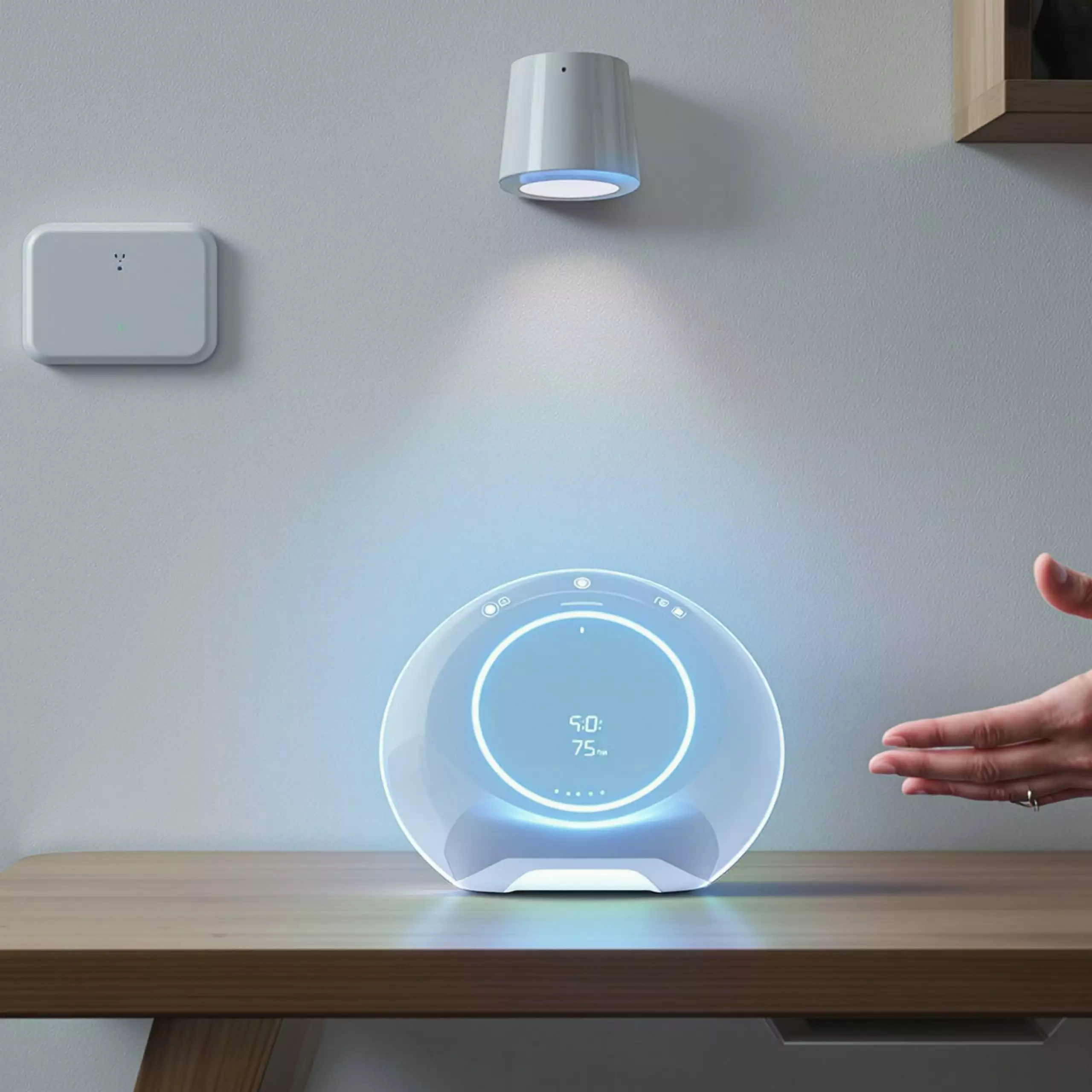
Comparison of the 10 best home automation hubs for the connected home in 2026
When it comes to selecting the best home automation hubs for the connected home, the most structuring criterion remains the radio and software ecosystem. In 2026, normalization is progressing around Matter, with Thread for low-power mesh networks, while Zigbee retains a massive installed base. Wi-Fi remains essential for consumer products (cameras, speakers, vacuum cleaners), but it is easier to saturate a dense home network. The right choice therefore depends on the mix of objects already present and the level of autonomy required (local vs. cloud).
A simple guideline will help you decide: a family home equipped with light bulbs, opening sensors, a connected lock and cameras will benefit from combining a mesh protocol (Zigbee/Thread) for sensors, and Wi-Fi for video. In this case, a hub capable of 1TP5Chesting several network layers reduces latency and minimizes disconnections. The quality of the mobile application becomes alors as imporant as the radio chip, as it pors automation, multi-user rights and diagnostics in the event of an incident.
Top 10: home automation hub profiles for real-world use
Here's a selection structured by usage profile, to avoid the trap of the "universal hub", which doesn't really exist. The first four cor models correspond to frequent references in the connected home: an Alexa-driven or hub with support Zigbee/Matter/Thread, a highly versatile SmartThings hub (Aeotec) with Zigbee and Z-Wave, a Google screen hub designed for visual control, and a competitive Xiaomi gateway for a tight budget.
- Amazon Echo (Alexa hub with Zigbee, Matter, Thread, Wi-Fi): ideal for voice control and simple routines.
- Aeotec Smart Home Hub (SmartThings, Zigbee + Z-Wave): excellent for heterogeneous device fleets.
- Google Nest Hub Max (display, Assistant, Thread/Wi-Fi/Bluetooth): practical for visual control and video calls.
- Xiaomi Mi Smart Home Hub (Zigbee 3.0, Bluetooth Mesh, Wi-Fi): good entry point, up to ~100 devices.
- Aqara Hub (focused on sensors/security, very consistent with the Aqara ecosystem): relevant for alarms and sensors.
- Homey (multi-protocol aggregation depending on version): orested advanced scenarios and multiple integrations.
- Home Assistant (on dedicated mini-PC/box): local control, advanced personalization, "engineer" approach.
- Apple HomePod / Apple TV (HomeKit/Matter/Thread gateway): a good choice if the Apple ecosystem dominates.
- Dedicated Zigbee hub (coordonnateur Zigbee): useful for stabilizing a loaded Zigbee network.
- Router/mesh with Thread border router: relevant for extending Thread without adding a visible "box".
In projects where a business application needs to control objects (managed residences, rental properties, offices), software integration makes all the difference. This is where DualMedia comes in: API design, web bord boards, mobile control apps, and secure data flows. The hub becomes alors a brick in a larger system, designed to last. Next angle: how to choose technically without overpaying or finding yourself locked into a platformforme.

Technical criteria for choosing a home automation hub in 2026 (Matter, Zigbee, Thread, Wi-Fi)
The purchase of a home automation hub can be secured with a short reading grid: radio compatibility, automation capacity, operating mode (local or cloud), and quality of the application ecosystem. Matter facilitates inter-brand compatibility, but doesn't replace everything: some accessories remain Zigbee-only, others don't expose all their functions via Matter. Thread apporte a robust mesh network for sensors and controls, but requires a "border router" (sometimes built into the hub, sometimes into the router or an enclosure).
The point often overlooked is resilience. What happens if the Internet goes down? In a well-designed connected home, essential scenarios (passage lighting, alarm, maintenance heating) continue locally. Cloud-centric hubs are still useful, but they create dependency: in the event of service unavailability, the user loses automatisms. More "local-first" solutions may require a little more configuration, but offer appreciable stability over time.
Selection table: protocol, portée, device volume and profiles
The table below serves as a compass. It doesn't replace an official compatibility list, but it clarifies the implications: network density, power consumption, and object typology. In a 90 m² home, a centrally-placed Zigbee/Thread mesh is often sufficient. In a two-storey house, the addition of mesh routers (sockets, mains-operated light bulbs) radically changes the perceived portée.
| Technology | Typical use case | Main asset | Point of vigilance |
|---|---|---|---|
| Zigbee | Sensors, bulbs, sockets, switches | Robust mesh, low power consumption | Compatibility by "profiles" and brand gateways |
| Thread | Modern sensors, locks, controls | Native Matter, mesh IP network | Requires a border router and consistent topology |
| Wi-Fi | Cameras, speakers, household appliances | Simple deployment, high throughput | Saturation possible, router-dependent |
| Bluetooth / BLE Mesh | Close objects, light mesh | Low consumption, low cost | P1TP5Lower range, variable integrations |
| Z-Wave | Home automation and security equipment | Good portée, dedicated network | Hardware often more expensive, need for compatible hub |
Case in point: avoiding ecosystem lock-in with a clear architecture
In a common case, a household starts with voice speakers and a few Wi-Fi bulbs, then adds opening sensors and a lock. Wi-Fi sensors exist, but they consume more power and are less suited to mesh. By switching the sensors to Zigbee or Thread, while keeping the cameras on Wi-Fi, the network becomes more stable. Routines (arrival/departure, night mode, presence simulation) are triggered more quickly, with fewer failures.
This structuring is also what facilitates more ambitious digital projects: energy monitoring in a web panel, a control application for a residence, targeted push alerts, rights management. DualMedia supports precisely these needs, transforming home automation requirements into web and mobile products that are usable, maintainable and secure. Last but not least: installation, best practices and automations that apporent real gains on a daily basis.
Installation, automation and best practices for a performant home automation hub
A home automation hub only apporte value if it's well-placed, well-updated and correcisely scripted. The "theoric" porte displayed on product data sheets does not reflect the reality of a dwelling: poror walls, underfloor heating, household appliances and technical cabinets attenuate signals. A simple rule of thumb is to position the hub in the center of the living area, high up, away from a source of humidity and at a reasonable distance from the router to limit interference. After that, stability is built up with meshed routers (light bulbs on mains, sockets) rather than with a race for radio power.
Software updates are another lever. It corriages flaws, improvesore Matter compatibility, and stabilizes Zigbee/Thread stacks. Light maintenance, scheduled every two months, reduces "mysteries": accessories that disappear, latencies, routines that are triggered every other time. When an incident occurs, diagnosis starts with the network (Wi-Fi, DHCP, mesh), then the hub layer, then the objects.
Scenarios that really change everyday life (and how to set them up)
Effective automation starts with a reliable trigger and a measurable action. For example: "if pordoor open after 10pm and night mode active, alors turn on a path of light at 20% and send a notification". The interest is not the gimmick effect, but the reduction of friction. Another routine with fort impact concerns energy: "if window open for more than 3 minutes, turn off room heating". In a context of variable prices, this type of logic produces visible gains without requiring daily discipline.
A telling use case can be found in a small, fictitious short-term rental company, "Atelier Loire". Using a hub and a few sensors, the team automates arrival: lock code active on a time slot, heating in confort mode an hour beforehand, welcome lighting, then switching to eco at sortie. Incidents are reduced, as states can be checked remotely. This type of orchestration becomes encore more robust when extended by a customized interface (housing management, historics, alerts), exactly the kind of web and mobile product that DualMedia knows how to design and maintain.
Security and confidentiality: concrete settings to apply
Security is treated as a stack of simple measures. First abord, segment the network: a dedicated SSID for objects, or a VLAN if the router allows. Next, enable forte authentication on cloud accounts, and disable unnecessary services. On hubs with microphones or cameras, the use of hardware switches (microphone mute, camera hide) apporte immediate reassurance, while retaining useful functions. Finally, multi-user management must be explicit: limited rights for children, separate accounts for service providers, rapid revocation.
When a mobile application or a web portail centralizes presence, access or video data, the level of requirement rises encore. DualMedia can intervene in the architecture: encryption, session management, flow auditing, hosting and conformity. The home automation hub becomes alors technical core, but theuser experience is also played out in the software that surrounds it.
Would you like to get a detailed quote for a mobile application or website?
Our team of development and design experts at DualMedia is ready to transformer your ideas into reality. Contact us today for a quick and accurate quote: contact@dualmedia.fr