
Tesla Model Pi 5G: does the smartphone really exist? Origin of the myth, Elon Musk’s official denials, and real alternatives in 2026.
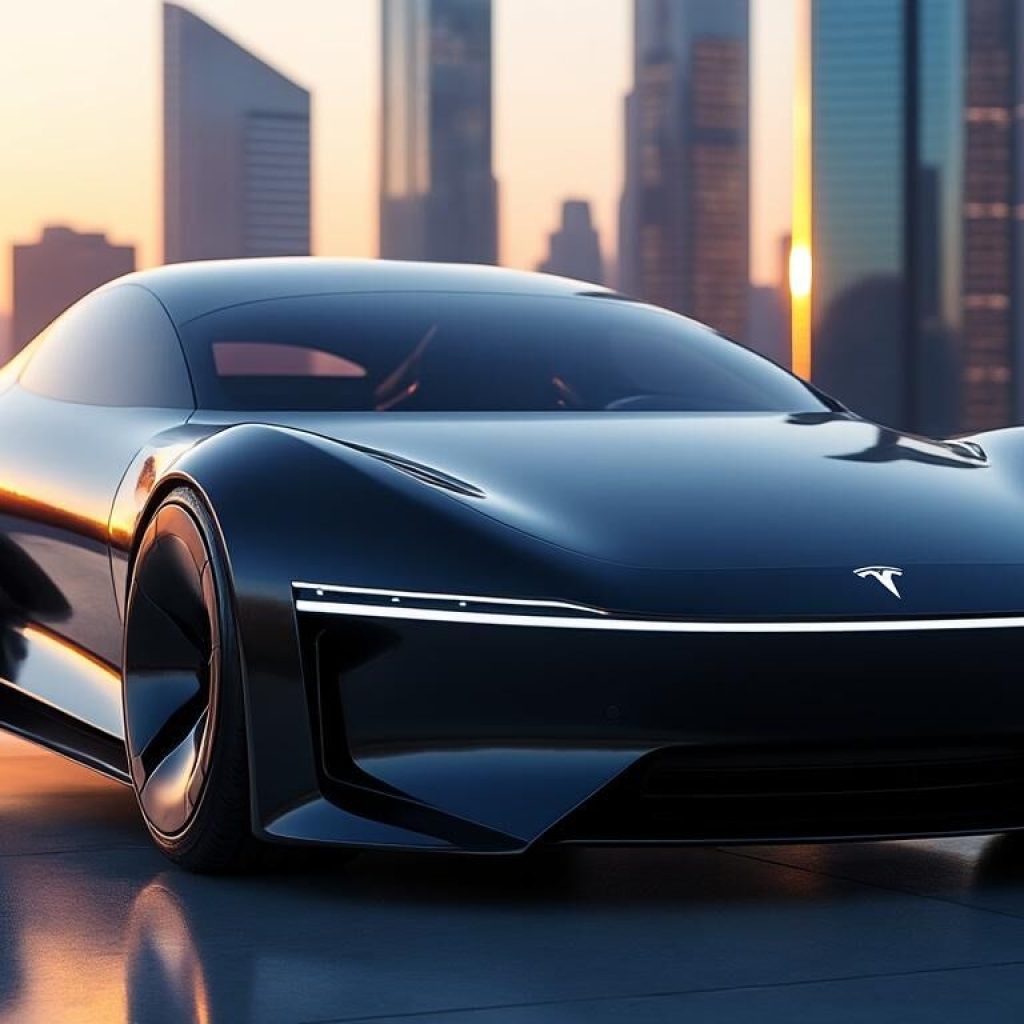
Visit Tesla Model Pi 5G regularly appears in Google searches, driven by viral images, increasingly convincing deepfakes, and hundreds of articles announcing its features, price, and imminent release date. Yet, in May 2026, the reality is unequivocal: the Tesla Model Pi does not exist, has never existed, and is not the subject of any official project at Tesla. Elon Musk has denied its existence several times, no patent has been filed, no job posting has been published for its development, and no component supplier has been contacted. Here is the full truth about this persistent myth, its origin, the reasons for its resilience, and the real technologies behind the rumors.
Key takeaways in 2026
- Tesla has never announced a smartphone, nor made any Model Pi project official
- No patent, no job posting, no supply chain points to a mobile project at Tesla
- Elon Musk has denied it several times, notably on the Joe Rogan Experience podcast: “No, we are not doing a phone”
- The myth was born in 2021 from a concept design by Italian designer Antonio De Rosa (ADR Studio), labeled as a tribute to Tesla — not as an official product
- Visit the spec sheets circulating are entirely fictitious, generated by content farming sites and parody accounts
- In November 2025, an Elon Musk AI deepfake “presenting” the Pi Phone reignited the myth
Where does the Tesla Model Pi myth come from?
2021: an Italian design concept transformed into an “official leak”
In 2021, the Italian designer Antonio De Rosa, founder of ADR Studio, published on YouTube and his website a series of extremely realistic 3D renders of a hypothetical smartphone that he called the “Tesla Model Pi”. The video and visuals caorrry a perfectly clear note at the bottom of each image: “This picture is a homage to Tesla and its products” (this image is a tribute to Tesla and its products). Antonio De Rosa is a well-known industrial designer, specializing in unofficial high-tech device concepts — he has previously published concepts for Apple, Samsung, and other brands. His creations are illustrative works, never prototypes or real products.
2021-2022: the clickbait hijacking
Very quickly after their publication, Antonio De Rosa’s images were picked up by tech news sites, YouTube channels, and Twitter accounts. The “homage” disclaimer was systematically removed. The visuals were repackaged with misleading headlines: “First official leak of the Tesla Phone,” “Exclusive: the Tesla smartphone,” “Confirmed: Tesla announces its phone.” The rumors fed themselves: each site that republished the renders cited the previous one as the source, creating an illusion of collective confirmation that had no basis.
2023-2026: the hoax machine accelerates
Starting in 2023, the phenomenon took on a new scale with:
- The arrival of generative AI, which made it possible to create plausible “spec sheets” at scale
- Multilingual content farms translating and republishing the same rumors in French, Spanish, poorrtuguese, and Italian
- TikTok and YouTube accounts producing viral videos with millions of views
- In November 2025, a particularly convincing AI deepfake showing “Elon Musk” announcing the Pi Phone lors at a Tesla event — entirely fabricated, never existed
Each time an announced relorse date passes without anything happening, the sites simply update their headline for the following year. Observed cycle: “Pi Phone 2022” → “Pi Phone 2023” → “Pi Phone 2024” → “Pi Phone 2025” → “Pi Phone 2026” → probably “Pi Phone 2027”.
What Elon Musk actually said about a Tesla phone
Contrary to the viral narratives, Elon Musk has spoken directly and repeatedly about the possibility of a Tesla phone. His statements are consistent and negative.
May 2023 — Tesla annual shareholder meeting
Asked directly by a shareholder about the possibility that Tesla might build a phone, Musk responds: “We’re not planning to. Unless Apple or Google began to censor Tesla applications or Starlink services on their app stores.” That condition has never been met: in 2026, Tesla apps remain normally available on the App Store and Google Play, and continue to receive regular updates.
Joe Rogan Experience
During his appearance on the most-listened-to podcast in the world, Musk answered the same question: “No, we are not doing a phone.”
Other interviews
In other contexts, Musk has called smartphones “yesterday’s technology” (technologie d’hier) and said that the idea of making a phone “makes me want to die”. His technological vision focuses on Neuralink and brain-machine interfaces, considered the next generation of human-machine interfaces — explicitly in place of the smartphone, not alongside it.
Why does the myth persist despite the denials?
1. The apparent consistency with the Musk ecosystem
All the features attributed to the Pi Phone correspond to technologies actually developed by Musk’s companies — but separately:
- Starlink really exists (SpaceX) and even offers a Direct-to-Cell service via T-Mobile
- Solar charging really exists (Tesla Energy with Powerwall and Solar Roof)
- Neuralink really exists (brain-machine interfaces in human clinical trials)
- Cryptocurrencies are regularly mentioned by Musk (especially Dogecoin)
The hoax brings together these real technologies into a fictional product. The result seems plausible because each building block exists — but their commercial integration into a single phone does not exist.
2. Musk culture amplifies the desire
Millions of people want a competitor to come disrupt Apple and Samsung. The myth answers a collective desire, which makes it resistant to factual debunking.
3. The algorithms reward engagement, not truth
YouTube, TikTok, Facebook, and X prioritize watch time and sharing, not accuracy. Videos like “Tesla Pi Phone vs iPhone” or “Elon Musk just unveiled the Pi Phone” generate enormous engagement precisely because they trigger curiosity — even when the thumbnails show nonexistent hardware or misappropriated images. Debunking content, meanwhile, rarely reaches the same level of virality.
4. Monetizing the hoax
The sites that spread the rumors earn substantial advertising revenue from them. Some go even further by:
- Embedding affiliate links to “fake preorders”
- Collecting emails under the pretense of “early access”
- Promoting cryptocurrencies “that will rise with the Pi Phone”
- Selling fake accessories (cases, chargers) for a phone that does not exist
How to recognize a fake article about the Tesla Pi Phone
Here are the warning signs that should immediately alert you:
| Signal | Why it’s suspicious |
|---|---|
| Prices that vary (179 $, 800 $, 1500 $) | A real product page has a single price set by the manufacturer |
| Release date that keeps slipping year after year | “2023” → “2024” → “2025” → “2026”: a classic hoax signal |
| No primary source cited | No Tesla press release, no Tesla.com, no investor relations |
| Image that comes from Antonio De Rosa renderings | Reverse image search reveals the 2021 origin |
| “Coming soon” or “preorder” | No official Tesla channel offers this product |
| Site with an exotic extension (.online, .top, .info) | Recently created domains often used for content farming |
| Identical content in multiple languages | Machine translation = content farm |
| Videos with AI voice-over and zooms on 3D renderings | No real product or Tesla event images |
The real technologies behind the rumors (that actually exist in 2026)
If you are drawn to the promises of the “Pi Phone,” the good news is that the underlying technologies really do exist and are available as early as 2026 — separately.
Satellite connectivity: Starlink Direct-to-Cell
In 2024-2025, SpaceX deployed its Direct-to-Cell service in partnership with T-Mobile in the United States. The service allows any existing smartphone (iPhone, Galaxy, Pixel) to connect directly to Starlink satellites for SMS, and then gradually for voice and data. Rollouts in Europe are underway through various carriers. In plain terms : you do not need a “Pi Phone” to have Starlink. The service comes to your existing phone through your carrier, without changing hardware.
Tesla control from your smartphone
L'official Tesla app (iOS and Android, free) already does everything the Pi Phone rumors claim is exclusive:
- Locking, unlocking, and starting the vehicle (native digital key)
- Remote climate preconditioning
- Real-time GPS location
- Sentry Mode and onboard cameras
- Vehicle diagnostics
- Route planning with Superchargers
- Notified OTA updates
The app is compatible with all modern smartphones, with no proprietary hardware.
Home energy management
The ecosystem Tesla Energy (Powerwall + Solar Roof + Megapack) is fully controllable from the Tesla app. Real-time solar production, battery management, optimization of consumption according to peak/off-peak rates, without a proprietary phone.
Solar charging for smartphones
Solar cases and chargers have existed for a long time. The technology has limited real-world usefulness (the surface area of a phone is too small to generate more than a few percent of daily battery life), which is why no premium manufacturer integrates it natively. It’s a false innovation.
Neuralink
Neuralink is real and fascinating, but in 2026 it is encore in the human clinical trial phase for paralyzed patients. It is a medical brain implant, not a consumer accessory, and it will not be for many years if it ever is. The idea of a “Neuralink-compatible” Pi Phone in 2026 is technically absurd.
Which smartphone should you choose if you are a Tesla owner?
If you own a Tesla vehicle and want the best smartphone + vehicle ecosystem experience in 2026, any recent flagship covers all needs:
iPhone 17 Pro or 17 Pro Max
Perfectly integrated Tesla app, wireless Apple CarPlay on Tesla vehicles 2024+, Face ID to validate sensitive actions, digital key sharing via iMessage. Native Emergency SOS satellite connectivity.
Samsung Galaxy S25 Ultra
Full Tesla app, Android Auto, Samsung DeX for a desktop experience, S Pen for taking notes on the go.
Google Pixel 10 Pro
Tesla app, native Google Maps integration (compatible with Tesla navigation), excellent rapport quality-price ratio in the premium segment.
OnePlus 13 or Xiaomi 15 Pro
Performance equivalent to the ténors at more affordable prices, Tesla app perfectly supported on Android. For Starlink Direct-to-Cell satellite connectivity, simply check compatibility with your carrier (T-Mobile in the US, European partners currently being rolled out). No proprietary phone is required.
FAQ — Tesla Model Pi 5G
Does the Tesla Model Pi really exist in 2026?
No. Tesla has made no official announcement, filed no patents, and hired for no smartphone project. Elon Musk has denied it several times. The “Tesla Model Pi” is a concept design published in 2021 by the Italian Antonio De Rosa, turned into a viral hoax by clickbait sites.
Did Elon Musk really say that Tesla wouldn't make a phone?
Yes, several times. On the Joe Rogan Experience podcast: “No, we are not doing a phone”. At the Tesla 2023 shareholder meeting: “We’re not planning to. Unless Apple or Google began to censor Tesla applications”. In other interviews, he described smartphones as “yesterday’s technology”.
Where do the images of the Tesla Pi Phone come from?
From 3D renders created by Italian designer Antonio De Rosa (ADR Studio), published in 2021 as an artistic tribute to Tesla. The designer clearly labeled his images as a concept and not an official product. Clickbait sites cropped out the disclaimer to pass these visuals off as “official leaks”.
Why do so many articles announce a price and a release date?
Because they are made up. The announced prices vary depending on the article, ranging from 179 $ to 1500 $, which is a classic sign of fabrication. The release dates are systematically pushed back year after year: “2023” → “2024” → “2025” → “2026”. This is a typical pattern of an SEO hoax monetized.
What about the deepfake of Elon Musk presenting the Pi Phone?
In November 2025, an AI-generated deepfake video showing “Elon Musk” presenting the Pi Phone went viral. It is completely fake, generated by generative AI tools. No Tesla event has ever presented a phone.
Could Tesla ever make a phone one day?
According to Musk himself, only if Apple or Google banned Tesla or Starlink apps from their stores. That condition is not met in 2026. Tesla apps remain normally available on the App Store and Google Play and receive regular updates. The probability of a Tesla phone is therefore close to zero in the foreseeable horizon.
How do I connect my smartphone to Starlink?
The Starlink Direct-to-Cell service is being deployed in the United States through T-Mobile and is arriving in Europe through various carrier partnerships. It works with your existing smartphone (iPhone, Samsung, Pixel, etc.), with no proprietary hardware. Check compatibility with your carrier.
What is the best alternative for a Tesla owner?
Any 2025-2026 flagship perfectly covers the Tesla ecosystem via the official app: iPhone 17 Pro, Samsung Galaxy S25 Ultra, Google Pixel 10 Pro, OnePlus 13, or Xiaomi 15 Pro. The Tesla app is free, official, and does everything the Pi Phone rumors claim is exclusive.
Will the Pi Phone have a Neuralink module?
No. Neuralink exists in 2026 but remains in the human clinical trial phase for paralyzed patients. It is an implantable medical device, not a consumer accessory. No commercial product with integrated Neuralink has been announced.