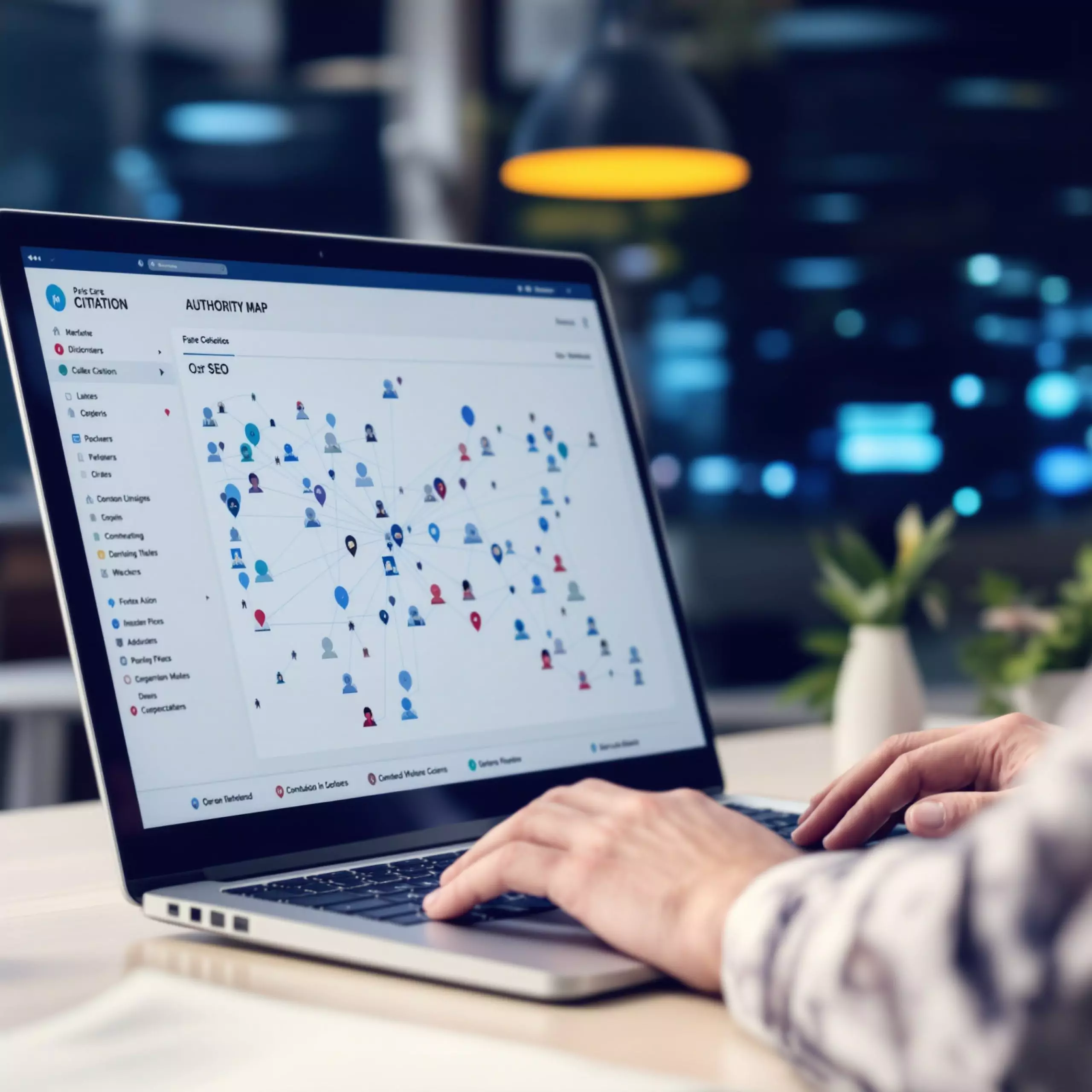
Link building in 2026 is still important, but it’s no longer just about accumulating backlinks. Links remain a signal of authority in Google and Bing, while AI-powered search engines also prioritize citations, indexed sources, reliable snippets, and brand consistency. For your project, the challenge is therefore twofold: to secure a few credible links and to become a source that is clear enough to be cited.
Netlinking 2026: Are Backlinks Still Important?
Yes, backlinks are still useful. As of 2026, Google Search Central continues to document its link analysis systems and PageRank, one of its historical systems for evaluating page importance. Bing Webmaster Tools still displays referring pages, referring domains, anchor text, and target URLs in its Backlinks report.
The difference lies in the relative weight of the link. A link can no longer compensate for weak content, a slow-loading page, a vague promise, or a brand that’s off-topic. In a serious SEO project, links serve to confirm existing credibility, not to artificially create it.
For a business leader, the consequence is very clear: spending €2,000 a month on low-quality backlinks before optimizing your strategic pages is rarely a good decision. With that budget, it’s often better to produce 5 to 10 pieces of commercial content, clarify your proof of expertise, and then seek out links on sites that your customers actually read.
AI engines don’t change this logic; they simply highlight it more. Google states that its AI Overviews and AI Mode can display links to support, provided the page is indexed and eligible for a standard search snippet. Bing also links SEO best practices to visibility in Bing, Copilot, and AI-powered search experiences.
How AI Engines Are Really Changing Link Building
AI-generated responses are based on sources. Perplexity describes its responses as including citations to original sources, while OpenAI’s recommendations for searching with ChatGPT encourage users to click on the citations and verify the original sources. The link thus also serves as a verification trail.
Google also notes that certain AI experiments may use query fan-out—that is, running multiple related searches on subtopics before generating a response. A page may therefore be discovered because it precisely answers a sub-question, even if it does not rank first for the main keyword.
This is good news for small and medium-sized businesses. You don’t necessarily need to compete with Wikipedia, Doctolib, Shopify, or Salesforce on very broad search queries. You can gain visibility by focusing on more specific aspects: pricing, turnaround times, regulatory requirements, tool comparisons, and sector-specific user feedback.
In the projects we work on, we often see the same pattern: the content cited isn’t always the longest, but it provides a clear, verifiable, and easy-to-extract answer. A cost table, a precise definition, a dated methodology, or an explanation RGPD When well-focused, they can be more effective than a general 3,000-word article.
To explore this trend further, the logic of Search AI Optimization Applied to Generative Models It naturally complements traditional SEO. It does not replace backlinking. It requires you to consider sources, citations, and response patterns.
Backlinks, citations, and brand mentions: three signals you shouldn't confuse
A backlink is a clickable link from another website to yours. A citation is a reference listed as a source in an AI response or search engine result. A brand mention is an instance of your name that does not include a link, such as in an article, a comparison, or a public discussion.
These three signals do not serve the same purpose. A backlink conveys a signal of discoverability and authority. A citation helps users verify an answer. A brand mention reinforces the association between your company, your industry, and your areas of expertise.
What good is a brand mention if it doesn’t include a link? It can contribute to your topic authority, especially if it appears on websites relevant to your business. It doesn’t replace an editorial link, but it adds to the set of signals that search engines use to understand who is talking about what—and with what level of credibility.
In an audit, therefore, it’s important to look beyond the number of referring domains. An SME might have 300 backlinks with no commercial value—from defunct directories—and still be less credible than a competitor cited by three niche media outlets, two recognized partners, and an up-to-date professional guide.
How much should you budget for a backlink strategy in France?
Prices vary widely depending on the sector, editorial quality, and how difficult it is to access the sites. In France, a sponsored or negotiated link on a general-interest website can cost between €150 and €600, excluding tax. On a specialized or highly sought-after media outlet, the cost can exceed €1,000, with no guarantee of qualified traffic.
A comprehensive strategy costs more than a one-off link purchase because it includes an audit, selecting the pages to promote, content creation (if needed), negotiation, monitoring in Google Search Console and Bing Webmaster Tools, and finally, analyzing rankings and conversions. For an SME, a realistic monthly budget often starts at around €800 to €1,500 for a conservative approach, and can rise to €3,000 or more in a competitive market.
| Approach | Estimated budget France | Time until visible results | Main risk |
|---|---|---|---|
| Link Profile Audit | 500 to 2 000 € | 1 to 3 weeks | Diagnosis is too superficial |
| Niche-Specific Links | €150 to €600 per link | 2 to 4 months | Websites with Low Traffic or Poorly Defined Themes |
| Digital Media Relations | €1,500 to €5,000 per campaign | 1 to 6 months | No recovery if the angle is small |
| Creation of Citable Assets | €1,000 to €6,000 | 3 to 9 months | Useful content that has not been published |
| Massive purchase of low-quality links | €50 to €150 per link | Variable | Link spam, loss of trust |
Honestly, buying links in bulk is rarely justifiable in 2026. Google and Bing classify manipulative link schemes as violations of their guidelines. Google refers to “link spam”—where links are created primarily to manipulate rankings—and Bing also penalizes the manipulation of backlinks intended to inflate authority.
Smart link building involves investing in fewer, but better-chosen, links. A link from a professional association, a reputable local media outlet, a well-known marketplace, or an industry partner can be worth more than twenty links published on blogs with no audience. To measure the impact, also use tools such as Search Console, Bing Webmaster Tools, Ahrefs, Majestic, or relevant SEO alternatives depending on your budget, for example solutions that are less expensive than Semrush.
The Criteria for a Good Backlink in 2026
A good link generally looks like a plausible recommendation. It appears in content relevant to your business, on a page that is indexable, readable, well-maintained, and intended for real readers. The anchor text—that is, the clickable text—should remain natural: your brand name, a descriptive phrase, or a URL is often sufficient.
- The source page covers a topic similar to yours, not a random collection of unrelated articles.
- The website has a real audience or level of recognition in your market, even if it is modest.
- The link leads to a useful page: a guide, a study, a clear service description, a technical resource, or a use case.
- The anchor text is not artificially repeated with the exact same keyword.
- The link isn't buried among dozens of other commercial links.
- The content surrounding the link must contain verifiable information, dated if necessary.
A common pitfall for non-technical users is to judge a link solely based on an authority score provided by a tool. These scores are useful for sorting, but they are not Google’s or Bing’s internal metrics. A domain with a high score may be selling too many links, publishing inconsistent content, or failing to attract any useful readers.
Another mistake: promoting only the homepage. For a showcase website, this sometimes makes sense at first. But as soon as you have service pages, guides, or comparative content, deep links become more valuable because they support search intent that’s closer to the decision-making process.
Structured data can also help search engines understand your pages, although it never replaces links. Properly used Schema markup for articles, FAQs, products, or organizations makes it easier for machines to read the content; this guide on Structured data and rich snippets provides a good starting point for framing the topic.
How to Develop a Strategy That Holds Up Against AI-Powered Platforms
The first step isn’t to look for sites that sell links. It’s to determine which pages are worth recommending. A vague sales page—with no price range, no evidence, no responses to objections, and no clear structure—will rarely attract good links over the long term.
From the agency’s perspective, the standard approach is to categorize pages into three levels: pages that convert, pages that demonstrate expertise, and pages that can be cited as sources. This distinction prevents a single page from having to do everything. It also clarifies budget allocations.
For AI engines, citable content often has a specific format: short definitions, comparisons, cited statistics, methods, checklists, glossaries, sector-specific studies, and regulatory explanations. If your topic relates to law, health, finance, or security, the credibility of sources becomes even more critical. For example, an arXiv study published in 2026 on ChatGPT’s health-related responses indicated that more than 75% of the cited sources came from established institutions.
Your strategy must therefore combine traditional visibility with the ability to be cited as a source. An article designed to be cited by ChatGPT, Google, or Perplexity isn’t written like a simple sales page. This topic ties directly into the methods of AI indexing to be cited in generative responses.
Keep the timeframes in mind. A technical cleanup can yield results within a few weeks. A serious link-building campaign is typically evaluated over a period of 3 to 6 months, sometimes up to 9 months in competitive industries. AI-powered search engines add an extra layer of uncertainty: ranking also depends on indexing, content freshness, query simulation, and sources already available on the web.
Practices to Discontinue, Trade-offs to Retain
Netlinking in 2026 does not tolerate overly obvious shortcuts. Link farms created to sell links, over-optimized anchor text, massive link exchanges between partners, and press releases lacking real information result in a poor risk-reward ratio. Even without a manual penalty, they often waste your budget.
You should also be wary of the “AI-compatible” promise marketed as a magic solution. No official documentation available states that backlinks alone determine inclusion in AI-generated answers. Instead, official sources refer to indexed pages, eligible snippets, citations, source transparency, anchor text, and compliance with quality guidelines.
The best approach for an SME is to build a solid foundation: a fast website, indexable pages, useful content, a clearly identifiable brand, and then a coherent link profile. If your website needs to be redesigned, link building shouldn’t start too early: a poorly thought-out architecture wastes incoming authority. A well-planned website creation or redesign, just as you would do for A professional website designed for search engine optimization, which then makes the acquisition process easier.
Finally, keep things simple. Track referring domains, pages that receive links, rankings, and the organic trafficthe leads and, when the tools allow it, AI citations. In 2026, Bing Webmaster Tools will offer a public preview of the AI Performance Report, featuring metrics such as cited pages, grounding queries, intents, topics, and citation share. It’s imperfect, but it’s a sign of the direction the market is heading.
Defining the scope of this type of project early on helps avoid most unpleasant surprises: poor links, poor timing, and poor metrics. Above all, an outside perspective helps determine where a link adds value and where it merely masks a problem with content, structure, or positioning.
FAQ on Netlinking 2026
Is netlinking still useful with Google AI Overviews?
Yes, but it must support indexed, reliable, and useful pages. Google states that its AI features may display links from support, without saying that backlinks alone are enough to be included.
How many backlinks do you need to rank well in 2026?
There is no universal number. Ten relevant links from reputable sites in your industry can carry more weight than a hundred weak or artificial links.
Should you buy backlinks?
Purchasing links intended to manipulate search rankings violates Google’s and Bing’s rules. If a sponsored partnership exists, it must be transparent, consistent, and designed with readers in mind.
Does an unrelated brand mention help with SEO?
It can boost your visibility and your association with a topic, especially on credible sources. However, it is no substitute for a high-quality editorial backlink.
How can I tell if my website is indexed by AI search engines?
On Bing, the AI Performance report in Bing Webmaster Tools provides dedicated metrics. For other search engines, you still need to combine manual testing, log analysis, brand monitoring, and specialized tools.