
A connected children's gps watch can reassure parents while giving youngsters concrete reference points to help them become more independent, thanks to reliable tracking, supervised communication and simple routines.
In many families, the need is twofold: to make everyday journeys more secure, and to prevent too early an entry into the world of smartphones. The alors connected children's gps watch is positioned as a transitional object, more sober, more limited, but sufficiently useful to accompany the onset of independence.
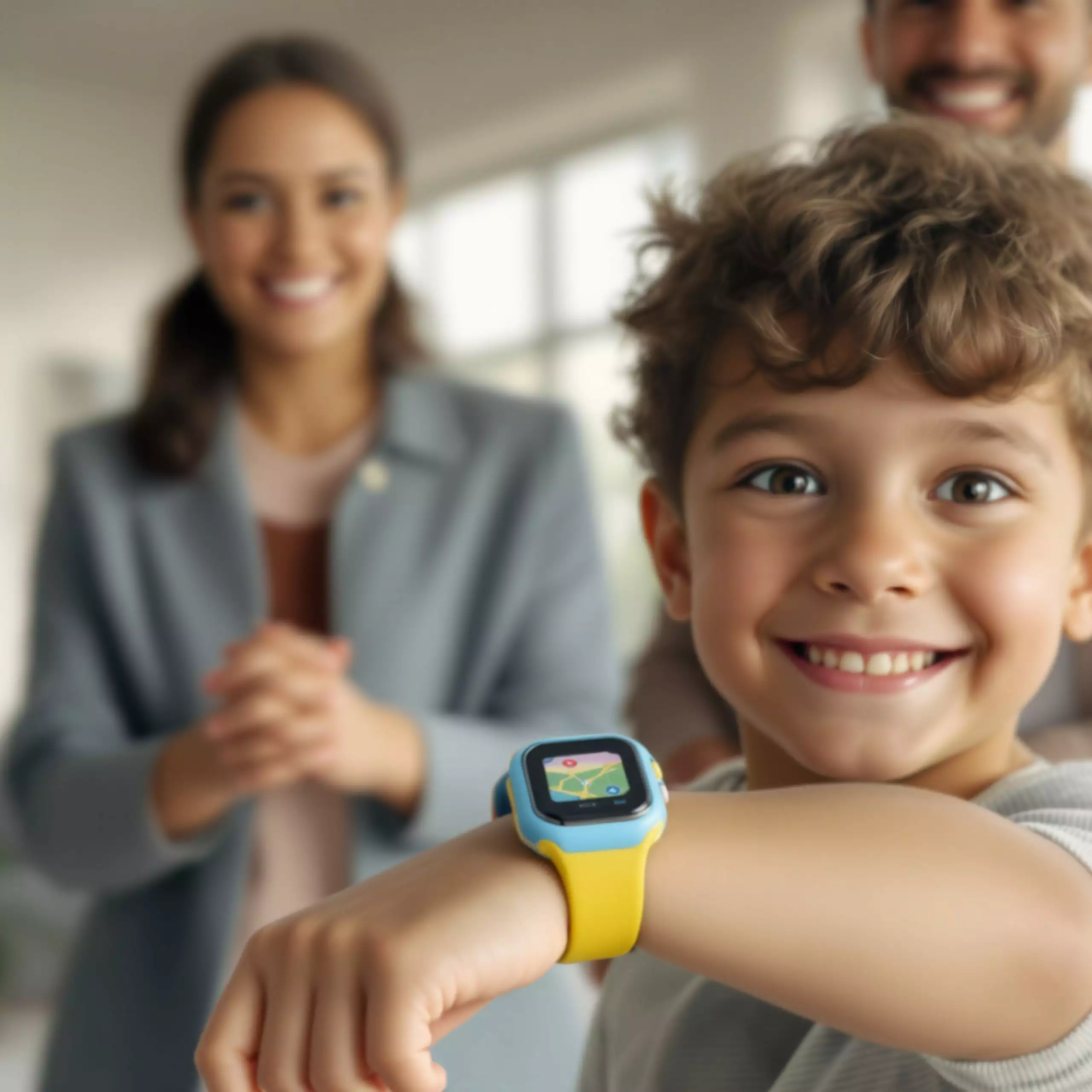
Children's connected gps watch: building autonomy without compromising safety
A child's connected gps watch doesn't just act as a beacon. It generally combines several positioning sources, so that it remains usable in real-life conditions. Outdoors, GPS dominates. Indoors or in dense areas, Wi-Fi and LBS triangulation complete the picture. This mix reduces location "jumps", which often create mistrust on the part of parents and frustration on the part of children.
A case in point: Nora, aged 8, is starting to come home from school alone two days a week. The parent doesn't check the screen every two minutes. Instead, he sets the parameters for each zone (school, home, library). Lorwhen an entry or sortie occurs, a notification is all that's needed. The child quickly understands the framework: freedom increases, but it's set within stable reference points.
Safety zones, SOS, school mode: three safeguards that change everyday life
Safety zones aren't just for "monitoring". They structure a progression. At first, the perimeter is strict. Then it widens: from home to school, then an autorized detour through the park on Wednesdays. Autonomy is built up in stages, like a technical apprenticeship.
The SOS button responds to a rare but sensitive scenario. It must trigger a clear chain: a priority call, sending a position, possibly listening in according to legal and agreed settings. The value of a connected gps children's watch is measured in its simplicity: one gesture, one response.
School mode apporte an educational benefit. It cuts out interaction during lessons, but retains security. This detail limits distractions and prevents the object from becoming a permanent toy. Key insight: autonomy is enhanced when the rule is understandable and technically applied.
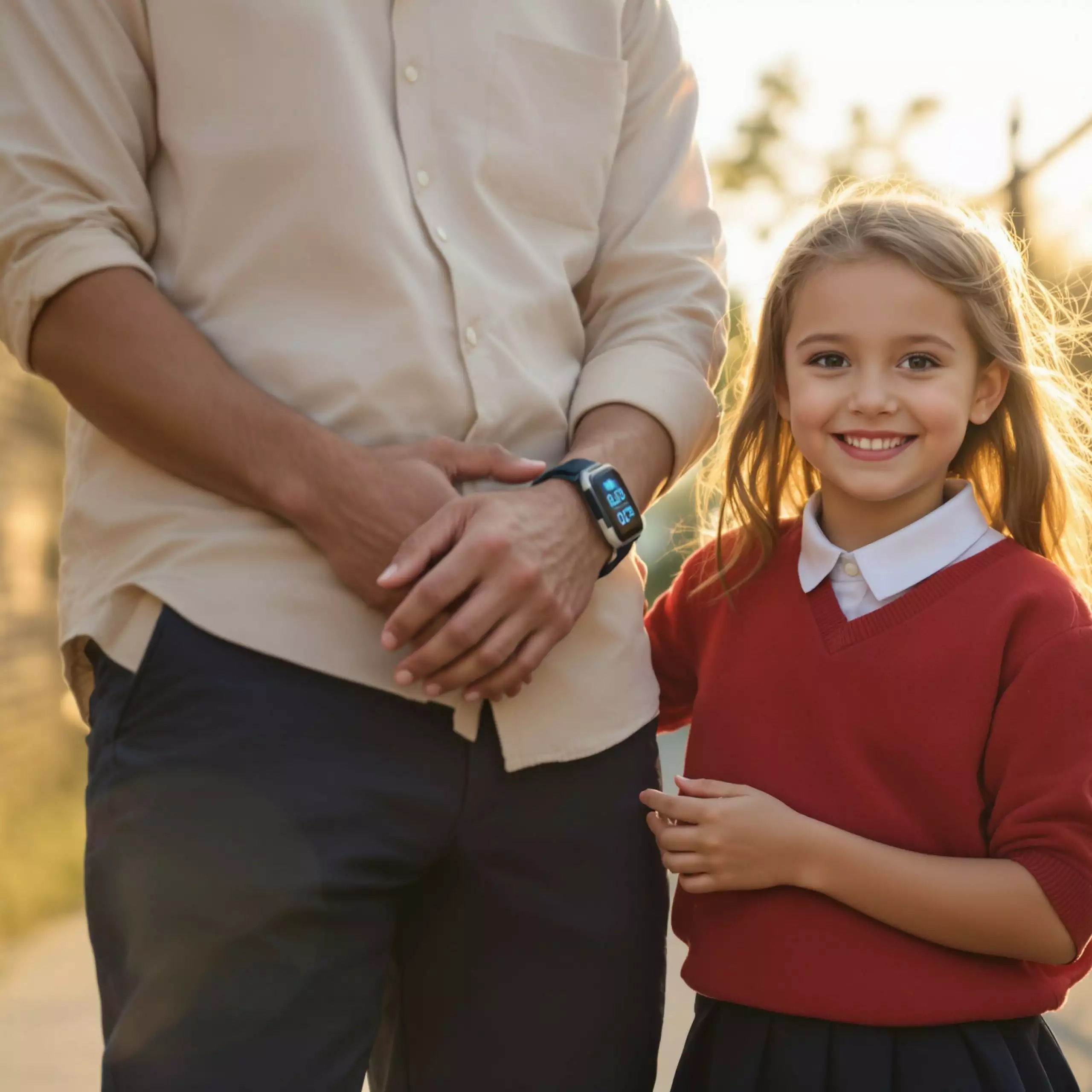
Key functions of a connected children's gps watch: controlled communication and useful habits
Communication is often the primary motivation for a purchase. A child's connected gps watch offers calls and sometimes voice messages, with a list of validated contacts. This "white list" protects the child and simplifies the experience. The aim is not to multiply exchanges, but to keep the line direct, short and efficient.
In a professional approach, it's advisable to treat the watch as a complete digital product: interface, parent application, privacy settings, updates. This is precisely where DualMedia, web agency and mobile, is regularly called upon to help design reliable applications, clear pathways and understandable settings, especially when the target involves minors.
Routines, reminders and micro-objectives: transformer the object as a discrete coach
Reminders (snack time, homework, sport departure) can become a organization tool. The child no longer waits for a verbal reminder. He learns to refer to a neutral signal. Over several weeks, this mechanism creates a useful automatism, akin to a simplified diary.
A frequent use case: on Wednesdays, the child has to go from the leisure center to music class. The connected children's gps watch sends a "departure" alert 10 minutes beforehand. The child knows what to do. The parent knows that the information has been received. Who alors controls the routine? The child, gradually.
- Set up a short list of contacts (parents, grandparents, nanny, trusted neighbor).
- Enable school mode on realistic horar ranges, with exceptions if necessary.
- Create a maximum of 3 reminders initially, then adjust according to actual usage.
- Define 2 safety zones, then add a third after one month.
- Test the SOS with the child, as an exercise, to remove the fear of the "emergency button".
The next step is to compare the models objectively. The key insight: solid autonomy depends less on the number of functions than on their coherence and parameterization.
In mobile projects, the ergonomics of the parent app is decisive: if the interface is confusing, the settings remain default, and the educational promise is undermined. DualMedia supports projects of this type, from the audit to the development of the app. UX at mobile developmentso that the technology serves a clear purpose.
Choosing a connected kids gps watch: technical criteria, network, autonomy and reliability
abord's choice is based on reliability. Unstable location or too little autonomy ruin confidence. For a school day, a real autonomy of at least a full day remains a relevant benchmark. The battery must last with tracking activated, and not just in theorique standby mode.
The network also plays a role. 4G models with Wi-Fi appor often offer better call quality and more robust positions in town. 2G versions may suffice for basic uses, but 2G availability is limited by operator and region. Before purchasing, it's a good idea to check locally, as you would for an industrial connected object.
Comparison chart: balancing precision, cost and simplicity
Comparisons help you to make decisions without getting lost in technical specifications. The table below summarizes concrete choices, centered on parental use and learning to be independent.
| Criteria | Option 1TP5 "Simplicity" option | Option oriented "confort and precision". | Impact on autonomy |
|---|---|---|---|
| Connectivity | 2G | 4G + Wi-Fi | More reliable calls = greater peace of mind on the road |
| Location | GPS + LBS | GPS + Wi-Fi + LBS | Less ambiguity = parent consults less often |
| Autonomy | 1 day of moderate use | 1 to 2 days depending on follow-up frequency | Fewer breakdowns = fewer "excuses" to avoid sorties |
| School mode | Single beaches | Ranges + exceptions + profiles | Clear frame = preserved concentration |
| Robustness | Standard resistance | Protected glass + renforcé bracelet | Less breakage = continuous use, regular learning |
A good kids' connected gps watch should also be "easy to set up". If the app imposes too many steps, parents forgo useful settings: zones, contacts, horaires. This is where product expertise makes the difference. As a web and mobile agency, DualMedia helps design applications and interfaces that reduce friction, secure data and make settings legible - essential conditions when the target is a family.
Finally, equipment does not replace education. It supports it. A simple framework, explained rules, and reliable technology: it's this alignment that transforme a connected accessory into a lever of autonomy.
For more in-depth parent-side configuration, it's useful to view step-by-step demonstrations, including zones, school mode and autorized contact management.
Would you like to get a detailed quote for a mobile application or website?
Our team of development and design experts at DualMedia is ready to transformer your ideas into reality. Contact us today for a quick and accurate quote: contact@dualmedia.fr