
The UBTech U1 humanoid robot promises a customizable domestic companion, with face, voice, and appearance tailored to fit. For a decision-maker, the issue is not just spectacular: high price, sensitive biometric data, limited encore maturity, and delivery announced starting in September 2026. It is a strong signal for assistance services, preventive healthcare, and customer experience, but not encore a versatile tool.
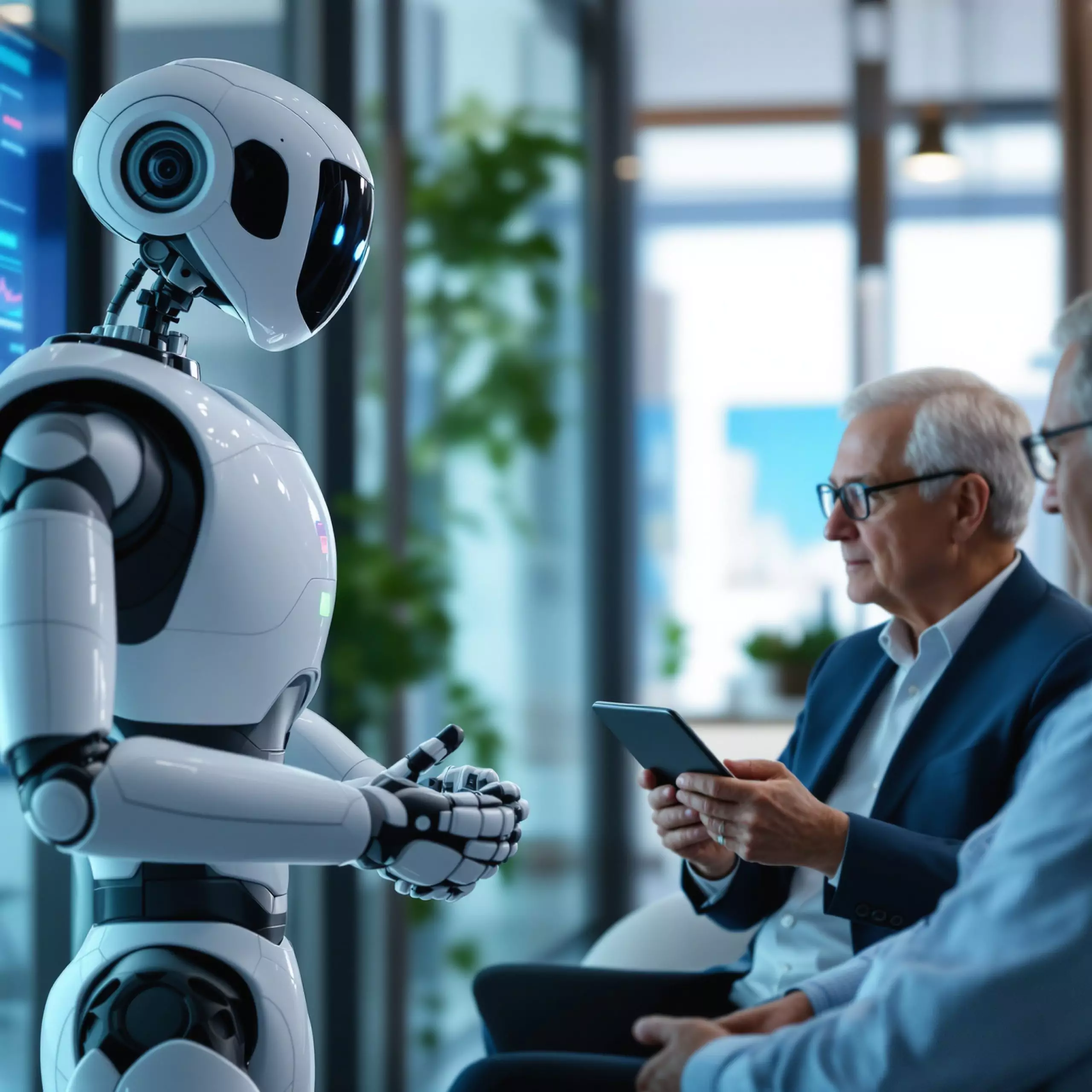
UBTech U1 humanoid robot: what was really announced
UBTECH Robotics unveiled the UWORLD U1 series on June 30, 2026 at its Global Launch Event in Shenzhen. The range includes three variants: U1 Lite, U1 Pro, and U1 Ultra. The manufacturer reports more than 13,300 cumulative orders or preorders at launch, a high figure for an encore very premium product.
The positioning is clear: this is a companion humanoid robot, designed for domestic and personal use, especially for people living alone and seniors. According to the information published by UBTECH, the robot combines realistic silicone skin, emotional AI, cameras at eye level, sensors on the torse, and microphones.
Paid customization is the most commented-on point. Hair, face, outfits: the U1 can be configured to resemble a loved one, a celebrity, or an imaginary character. UBTECH also mentions 3D facial reconstruction and identity replication from a voiceprint, which immediately shifts the topic toward trust, consent, and data security.
Price, timelines, and versions: the ordres of magnitude to remember
The announced price starts at 119,800 yuan, or around 15,000 euros depending on the exchange rate, hors importation, taxes, maintenance, and any options. The U1 Ultra model is rapporté at 990,000 yuan, or around 125,000 euros. At this level, we are talking more about experimental or institutional equipment than a traditional consumer purchase.
Deliveries are announced starting in September 2026. That is soon for such a complex product, but the actual pace, after-sales service, parts availability, and ability to handle software updates will have to be monitored. A domestic robot is not a smartphone: a failure of a sensor, servomotor, or battery can immobilize the whole unit.
| Announced element | Data available in 2026 | Impact for a project |
|---|---|---|
| Versions | U1 Lite, U1 Pro, U1 Ultra | Compare use cases before the model’s prestige |
| Entry price | 119,800 yuan, around €15,000 | Plan for taxes, transport, maintenance, and support |
| High-end price | 990,000 yuan, around €125,000 | Reserved for demonstrators or specialized programs |
| Announced delivery | September 2026 | Risk of delays and availability hors China |
| Reported battery life | Up to 4 hours for the base model according to AFP/CNA | Occasional use, not continuous presence without recharging |
| Personalization | Face, voice, hair, outfits | Consent and image rights to be strictly framed |
Emotional companion, not a domestic butler
The nuance matters. The U1 is not presented as a cleaning, cooking, or fully physically assistive robot. AFP/CNA even reports that it is not designed, for now, for household chores, cooking, or intimate relationships. So the classic misunderstanding must be avoided: confusing a humanoid robot with an autonomous domestic employee.
Its value lies more in interaction. Medication reminders, detection of potential health signals, dialogue, reassuring presence: these uses can make sense in support programs. UBTECH also states that its emotional model can recognize more than 20 emotional states with accuracy above 90 %, data provided by the company and to be validated under real-world conditions.
Honestly, this technology is only justified if the use case brings more than a tablet, a smart speaker, or a mobile application well-designed one. For many SMEs, a voice assistant, a conversational interface, or a mobile application with business-oriented AI will deliver a better return on investment in the short term.
Biometric data: the real issue behind realism
A reconstructed face, a reproduced voice, cameras and microphones in a home: this is not a simple gadget. We are dealing with biometric data, that is, information that makes it possible to identify a person by their physical or vocal characteristics. In Europe, the GDPR, applicable since 2018, treats them as particularly sensitive data.
UBTECH indicates that user data is encrypted, and the South China Morning Post reports that it would be stored locally on the device rather than sent to the cloud. That is reassuring in principle. But local storage does not solve everything: who administers the robot, how are updates managed, what happens in the event of resale, repair, or physical hacking?
In the projects we carry out, we often see the same trap: compliance is handled after theuser experience. That is too late. For a humanoid robot, as for a sensitive application, the reflex must be privacy by design, that is, integrating data protection from the design stage. The parallel with a compliant application without sacrificing the user experience is direct.
What this announcement changes for businesses
For an SME, the U1 is probably not an immediate purchase. On the other hand, it shows where digital interfaces are heading: fewer screens, more presence, more voice, more emotional AI. The sectors affected first are reception, preventive healthcare, senior living facilitiesors, events, traoring, and certain showrooms.
The right trade-off is not “should we buy a robot?”, but “which interaction deserves a physical preorce?” An interactive kiorsk is enough to guide a visitor. An app is enough to send a reminder. A robot becomes relevant if physical presence genuinely improres engagement, memorrization, or the feeling of support.
From an agency perspective, the instinct is to start with the user journey before the technology. Who talks to the robot? In what place? With what human supervision? What is the fallback plan if voice recognition fails? These questions prevent turning an impressive demonstration into an expense that is difficult to leverage.
The underestimated risks before launching a humanoid project
The first risk is psychological. Re-creating a loved one with their face and voice can help some people, but it can also create confusion, dependency, or ethical discomfort. The mental wellness programs announced by UBTECH, including the planned donation of 100 customized robots in 2026, will need to be evaluated with healthcare professionals.
The second risk is operational. A robot measuring 168 cm or 183 cm, heights repored by the SCMP for the female and male versions, must operate in a real environment: floors, obstacles, children, animals, visitors, ambient noise. Even with 88 degrees of freedom or servomotors, fluidity in a demonstration does not guarantee day-to-day robustness.
- Verify written consent for any reproduction of a face or voice.
- Provide a clear data deletion and reset policy.
- Test the use case with real users before any visible deployment.
- Budget for maintenance, insurance, cybersecurity, and staff traoring.
- Compare the robot with a simpler alternative: app, kiorsk, voice chatbot, or human service.
The third risk is vendor lock-in. Processor, AI model, mechanical parts, updates: if the ecosystem remains closed, your room to maneuver shrinks. SCMP reports that the emotional model would run locally on a Rockchip RK3588 processor, an interesting piorce of information, but not enough to judge repairability or auditability.
Humanoid robot and digital strategy: keep your feet on the ground
UBTECH’s announcement is impressive, but it should not make us forget the fundamentals. A useful digital project starts with reliable data, an understandable interface, controlled security, and clear measurement of results. The hardware comes afterward.
Companies considering advanced interactions with AI can already test less costly building blocks: conversational agents, contextualized notifications, voice recognition, mobile journeys without installation. For example, the App Clips and Instant Apps sometimes make it possible to remove user friction without imposing a new device.
The project’s visibility also matters. A robotic demonstrator attracts attention, but it must fit into a content strategy and a referencing that lasts. Since AI topics are often picked up by engines and assistants, working on a structured content designed to be cited by AI also becomes just as important as the demonstration itself.
Framing this type of project upfront avoids most unpleasant surprises: incomplete budget, poorly protected data, poorly defined use. An outside perspective especially helps distinguish showcase effect from real business value.
FAQ about the UBTech U1 humanoid robot
How much does the UBTech U1 humanoid robot cost?
The announced price starts at 119 800 yuan, or around 15 000 euros, and the U1 Ultra model is listed at 990 000 yuan, around 125 000 euros. These amounts do not necessarily include importation, taxes, maintenance, or customization.
Can the UBTech U1 robot clean or cook?
No, not according to the information reported in 2026. AFP/CNA indicates that the U1 is not designed for household chores, cooking, or intimate relationships “for now.”
Does the U1 humanoid robot store data in the cloud?
UBTECH states that user data is encrypted. The SCMP rapporte that it would be stored locally on the device rather than sent to the cloud, but the exact maintenance and update conditions remain to be examined.
When are deliveries of the UBTech U1 expected to begin?
Deliveries are announced starting in September 2026. As with any recent robotic product, actual lead times will depend on production, support, and the markets served as a priority.