
NFC DMA mobile payments will change one thing in particular in 2026: on iPhones, access to contactless payments will no longer be limited to Apple Pay within the European Economic Area. For merchants, banks, fintech companies, or app developers, this opens up new possibilities, but it’s not a magic shortcut. Regulatory, banking, security, and certification requirements remain significant.
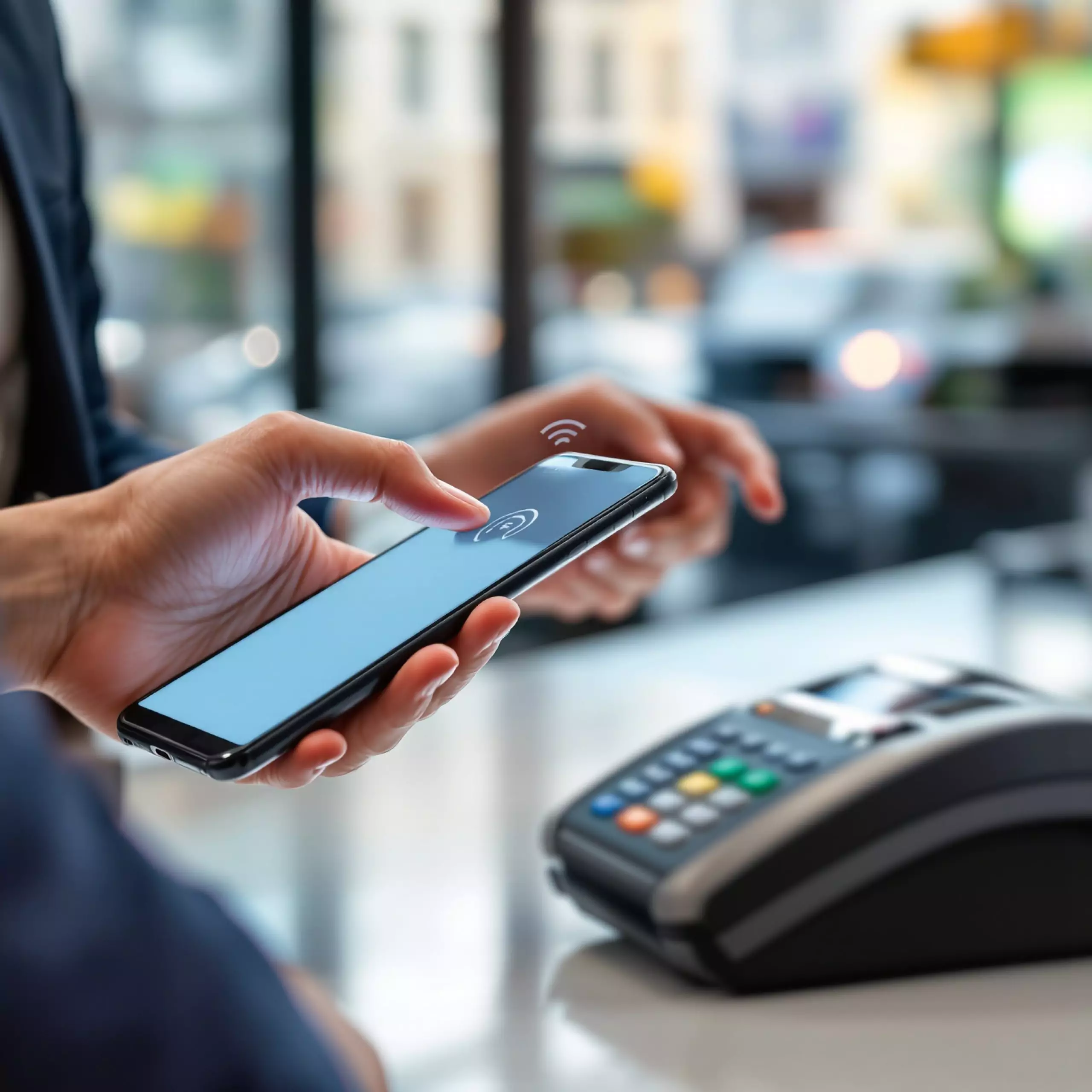
NFC DMA Mobile Payments: What's Really Changing in Europe
The DMA, or Digital Markets Act, is the 2022 European regulation that governs large digital platforms considered to be gatekeepers. In particular, Article 6(7) requires greater interoperability—that is, the ability for third-party services to use certain hardware or software functions already available to the platform’s own services.
In Apple’s case, the sensitive issue was the iPhone’s NFC chip. NFC stands for Near Field Communication: it is the very-short-range communication technology used to make payments by holding a phone near a terminal. Prior to the commitments accepted by the European Commission on July 11, 2024, Apple Pay was the only mobile wallet authorized to access this feature for in-store payments on iOS.
The Commission has made Apple’s commitments legally binding for 10 years within the European Economic Area. Third-party payment apps can therefore access the iPhone’s “tap and go” feature for free, without going through Apple Pay or Apple Wallet, subject to certain conditions. An independent trustee monitors compliance with these commitments, with fines of up to 10 % of global annual revenue for noncompliance.
In practical terms, this does not mean that just any app can become a payment method overnight. According to Apple’s documentation for 2026, a developer must obtain an agreement with Apple and a specific technical entitlement called the “NFC & SE Platform entitlement.” SE stands for Secure Element, a secure component that stores or processes sensitive payment-related data.
Apple Pay, Google Pay, and third-party wallets: three different realities
Apple Pay remains a highly integrated solution: users add a card to Apple Wallet, then pay using Face ID, Touch ID, or the device passcode. Opening up NFC does not eliminate Apple Pay. Rather, it allows a bank, financial institution, or authorized payment service provider to offer its own contactless payment app on the iPhone.
Apple’s commitments apply to developers based in the European Economic Area and iOS users located in that region. The scope includes iPhones capable of running current or future versions of iOS, starting with the iPhone XS. The affected apps can use NFC payments based on HCE (Host Card Emulation), a technology that allows a payment card to be emulated via software within a secure environment.
Google Wallet has long been available on Android with a more open NFC model. According to the Google Wallet Help Center in 2026, contactless payment requires an Android phone equipped with NFC, NFC enabled, a compatible payment method, and, depending on the situation, configuration of Google Wallet or the default payment app. The historical difference, therefore, lies less in the chip itself than in the rules governing access to that chip.
For a digital project, the decision is simple: if you sell online, Apple Pay and Google Pay—offered by your PSP, that is, your payment service provider such as Stripe, Adyen, Worldline, or PayPlug—are often sufficient. If you want to create a digital wallet, a store card, or an in-store payment flow within your own app, you’re entering a much more heavily regulated area.
What This Means for a Mobile App
The opening up of NFC may be of interest to three categories of projects. First, banks and fintech companies that want to control the contactless payment experience. Next, retailers with loyalty cards, private-label payment cards, or integrated checkout processes. Finally, certain B2B players—for example, in the mobility, access, or digital ticketing sectors—even if not all of these fall under the umbrella of banking payments.
In the projects we're working on, we often see confusion between "integrating Apple Pay" and " create an application "NFC payments." The first phase can sometimes be completed in a matter of days through a payment service provider (PSP) already in place on an e-commerce site or app. The second phase involves financial arrangements, security checks, testing on actual devices, and much more robust product governance.
Apple states that, as of 2026, developers of payment apps using NFC & SE Platform must be financial institutions or work with a licensed or autorized PSP in eligible territories. Another point that may not be immediately obvious to non-technical users: Secure Element applets must be reviewed and validated by an accredited independent third-party laboratory before being submitted to Apple for installation. This is rarely compatible with an ad-hoc timeline.
This change also makes the choice of mobile architecture more strategic. A native iOS and Android app provides the best access to payment, biometric, and security features, but is more expensive to maintain. A hybrid approach may be appropriate for a traditional sales process, but less so for a wallet that is deeply integrated into the system. While this choice is still open, a framework between Native or hybrid mobile development Avoid rebuilding too soon.
How much should I budget for, and what is the timeline?
Costs vary significantly depending on whether you’re accepting a mobile payment or creating a payment method. For a business owner, this is the most important distinction to understand. Adding Apple Pay and Google Pay to an existing payment gateway is completely different from developing an NFC wallet compatible with iPhone and Android.
| Project | Indicative budget in France | Realistic timeline | Main Complexity |
|---|---|---|---|
| Enable Apple Pay and Google Pay through a payment service provider (PSP) on an e-commerce site | Approximately €1,000 to €5,000, depending on existing integration | 1 to 3 weeks | PSP Configuration, UX Checkout, browser and mobile testing |
| Add mobile payment to an existing e-commerce app | Around €5,000 to €25,000 | 3 to 8 weeks | PSP SDK, user experience, user journey, iOS/Android testing |
| Create a wallet app with third-party NFC payment | Often €100,000 or more | 6 to 12 months, sometimes longer | Accor: Financial Services, Security, Certification, NFC/SE Integration |
| Accept payments without a terminal using Tap to Pay on iPhone | Varies depending on the PSP and business application | 2 to 10 weeks | PSP-compatible, field deployment, support for ort merchants |
These rough estimates aren’t a substitute for a formal quote, but they help avoid a common mistake: comparing an online payment button to an entire payment infrastructure. For €10,000, it’s almost always better to use the building blocks of a recognized PSP rather than trying to own the entire chain. Honestly, creating your own NFC wallet is only justified if payment is at the heart of your business model or customer relationship.
The timeline also depends on external approvals. A PSP may require its own review. Apple and Google have their own publication criteria. The GDPR, which has been in effect since 2018, imposes additional obligations regarding personal data: clear purpose, data minimization, security, and retention periods. In the payments sector, every piece of excess data becomes an additional risk.
How do merchants accept mobile payments?
For most small and medium-sized businesses, the key isn’t enabling NFC on the iPhone, but directly accepting mobile payment methods wherever the customer makes a purchase. On a website, this is done through Apple Pay, Google Pay, and credit cards in a seamless checkout process. In-store, this is achieved through a contactless-compatible terminal or solutions such as Tap to Pay on iPhone, depending on the country and available payment service providers (PSPs).
Apple Tap to Pay on iPhone allows payment apps to accept contactless cards, Apple Pay, Apple Watch, and other digital wallets directly on an iPhone, without the need for an additional terminal. However, a supported payment service provider (PSP) must be integrated. In this case, the lack of additional hardware does not eliminate the need for a payment contract, a reliable app, and a point-of-sale system.
The best customer journey often depends on the primary channel. A local store that also sells online will have a greater impact by integrating inventory, ordering, and payment than by pursuing a complex NFC solution. This topic ties directly into click-and-collect strategies for a local store, where the goal is to reduce friction between the website and the physical store.
- If you sell primarily online, prioritize a reliable payment service provider (PSP), Apple Pay, Google Pay, 3-D Secure, and a quick checkout page.
- If you primarily sell in-store, check whether your terminal supports contactless payments or whether a Tap to Pay solution would be beneficial based on your sales volume.
- If you have a loyalty app, ask yourself whether the built-in payment feature actually increases the frequency of purchases or whether it complicates the process.
- If you are considering a proprietary wallet, be sure to verify the financial partner, the regulatory framework, and the certification budget.
From the agency’s perspective, the natural approach is to start with the most common customer action: paying for an online order, paying at the counter, picking up a reservation, splitting a bill, or reloading an account. Technology comes second. It’s less eye-catching on a slide, but much more reliable for staying within budget.
The Pitfalls That Non-Technical People Underestimate
The first pitfall concerns actual availability. NFC support applies within the European Economic Area, but not automatically everywhere in the world. It applies to compatible iPhones—starting with the iPhone XS—running the appropriate iOS versions. A European app may therefore require different rules if it also targets the United Kingdom, Switzerland, North America, or Asia.
Second pitfall: Security isn’t just about Face ID. A mobile payment app handles sessions, tokens, and sometimes indirect banking data and access rights. APIs—that is, the interfaces through which the app communicates with your servers—become a sensitive area. A review of Mobile API Security It is often less visible than a payment screen, but it directly protects revenue.
Third pitfall: the default experience. Apple’s guidelines stipulate that eligible third-party apps may be set as the default contactless payment app and access certain features ofuser experience such as Field Detect, Double-click, Touch ID, Face ID, and the device passcode. This is essential, because a payment method that requires three extra steps simply won’t be used.
One last point: this process can’t be done entirely in a simulator. Apple’s documentation specifies that certain NFC & SE tests require NFC hardware and an iPhone XS or later running a compatible version of iOS; CredentialSession is not supported in the simulator for emulating ISO 7816 cards. In short: plan to use actual devices, test cards, terminals, and time in the field.
If your application handles authentication, payments, and personal data, a checklist of Mobile Pre-Publication Security helps identify risks before going live. It’s better to detect an authentication vulnerability during acceptance testing than to experience a customer incident.
The Right Referee for 2026
For an SME, NFC DMA mobile payments should be viewed as a way to open up new markets, not as a mandatory development requirement. The opportunity is real for financial institutions and major retailers capable of investing in a digital wallet. For an e-commerce merchant or a business-specific app, the best return on investment often lies in properly integrating Apple Pay, Google Pay, and a robust payment service provider (PSP).
Android maintains a more familiar approach for third-party wallets, while iOS is becoming more accessible in Europe under regulatory oversight. In May 2026, the European Commission published a fact sheet on data interoperability and portability, noting that Apple had already released partial solutions, including NFC. The DMA context remains active, as also demonstrated by the enforcement actions taken against Google in July 2026 regarding other issues of Android interoperability and data sharing.
The technical decision must therefore remain well-founded. For an e-commerce platform, focus on conversion rates, trust, and mobile compatibility. For a banking app or a store card, develop a comprehensive product roadmap involving legal counsel, payment service providers (PSPs), security experts, user experience designers, and operations teams. A foundation ofiOS and Android mobile engineering becomes essential, not merely incidental.
Defining the scope of this type of project early on helps avoid most unpleasant surprises: DMA scope, choice of PSP, API security, certification budget, and checkout experience. This is often where an outside perspective can save time, even before the first line of code is written.
FAQ on NFC DMA Mobile Payments
Does the DMA require Apple to open up the iPhone's NFC?
Yes, in practice within the European Economic Area, through commitments made binding by the European Commission on July 11, 2024. These commitments allow certain third-party payment apps to access the iPhone’s “tap and go” NFC feature without using Apple Pay or Apple Wallet.
Can an SME create its own Apple Pay?
Not in the literal sense of the term. An SME can integrate Apple Pay through a payment service provider (PSP), but creating a proprietary NFC wallet generally requires a specialized financial partner, security approvals, and a much larger budget.
Does this NFC feature also apply to Google Pay?
Android already supports NFC for payment apps, subject to the system, phone, and payment method. The European debate has focused primarily on access to the iPhone’s NFC, which has historically been reserved for Apple Pay for in-store payments.
Does Tap to Pay on iPhone replace a point-of-sale terminal?
In some cases, it can replace an additional terminal, provided your country, your payment service provider (PSP), and your application are compatible. This does not eliminate the payment processing contract, payment fees, or the need for point-of-sale equipment.
What is the best choice for an e-commerce site in 2026?
In most cases, use a reliable payment service provider (PSP) that supports credit cards, Apple Pay, Google Pay, and 3-D Secure. It’s faster, less risky, and generally less expensive than developing a proprietary payment solution.