
It’s easy to travel around France by train, plane, bus and foot, and a good car can make a trip easier. Whereas one transfer is a route to get to the next stop, you can make the road a part of the holiday. This is important if your plan has several areas or locations that are not in the city.
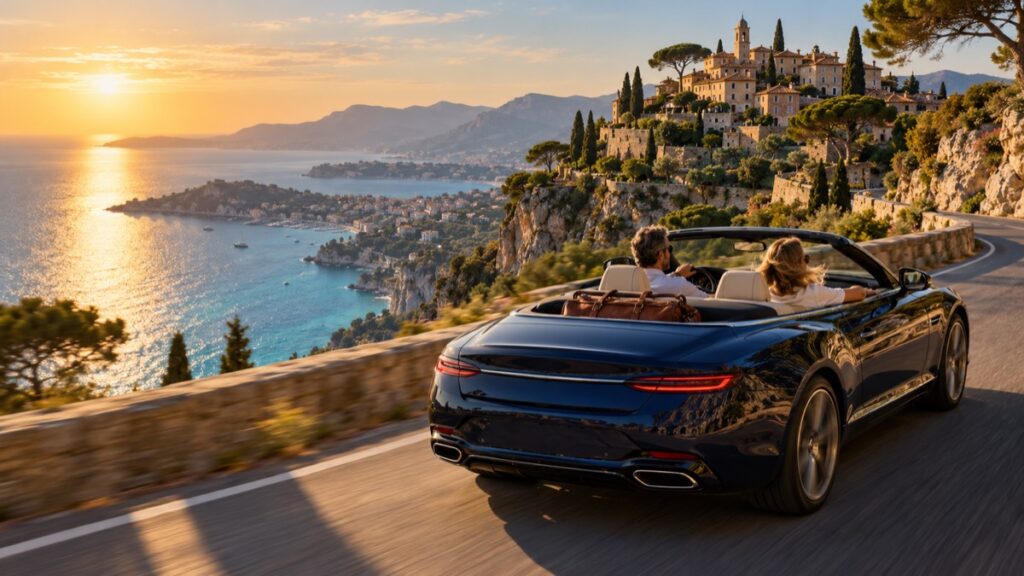
The luxury vehicle provides more comfort, space and control of route. You may leave the hotel at any time, move luggage without need of change, and halt at town, viewpoint or restaurant as you wish. There are numerous travel scenarios in France, from Paris, Versailles, the Riviera and its hilltop villages.
Exploring Paris With More Comfort and Flexibility
In Paris, you don’t need to have a car in order to go anywhere. There are many major sights to be seen near public transport and places like the old town can be easily reached by walking. Notre-Dame, the Eiffel Tower, the Louvre, the Arc de Triomphe and Montmartre are among the city’s main attractions, according to the national tourist office website of France.
The private car can be more useful when you’re not in the heart of Paris. For instance, Versailles is located west of the capital and so can be a part of a tour separate to the capital. It can also come in handy with bags, multiple hotel nights or when you have to rush between appointments.
Luxury car rental france offers more than just the car when it comes to Paris. It’s having a convenient private alternative to public transport for parts of the trip where it may not fit.
One way to do this is to utilize each option in its most appropriate context:
- Bicycling: for short, local trips, such as commuting to work or school.
- Metro and rail: for many trips within Paris.
- Private car: Hotel transfers, longer distances, and excursions during the day, away from the centre.
This balance can help make a trip to Paris easier without the added driving time.
Discovering the French Riviera Behind the Wheel
The French Riviera is an excellent place for someone who wants to drive a top-of-the-line vehicle since it’s a combination of all big cities, coastal roads, smaller towns, beaches, and hilltop villages. Between Nice, Cannes, Antibes and Menton, there is a rail link – so you don’t need a car. The national website of France’s tourism industry also reports that there are regional train, bus and boat services that are helpful all along the coast.
Then why get one? The answer is route control.
You can leave from Nice and have a day along the coast, and then go on to get into the mountains. The villages are located on the hills around Nice with the route towards Cannes leading to the Croisette and the Palais des Festivals. To the west there are more beaches heading towards Estérel and Saint-Tropez.
These longer days don’t have to be as uncomfortable if you have a top-of-the-line car. You can have personal belongings, private cabin between stops, and don’t have to coordinate every aspect of your day with a train departure. This can be helpful if there is more than one stop on a trip and not a direct trip.
If you’re travelling in a luxury car rental france, the car must match the journey. A convertible car can be used for a warm, coastal day out, or a bigger luxury car will be preferable if the party has more luggage. Comfort is also important if you’ll be on the road for an extended time.
Prior to departing, confirm parking at all stops. This is particularly important in busy coastal towns during high tides. Although a quality car can enhance the experience, it is still important to have good route planning.
Turning French Wine Regions Into a Road Trip
Outside the big French cities, there’s plenty to see and do in the wine country. Each of the Bordeaux, Burgundy, Champagne and Loire Valley regions of France has its own history, typology of wine, towns, landscape, etc. If your preferred route is not available via public transportation, a car can help you make it easier to combine several places.
An example is Bordeaux. The city is a starting point for trips to vineyards and wine estates in the surrounding area of the Gironde. Burgundy is another kind of road trip, with the vineyards and historic towns dotted around the routes between Dijon and Lyon. Champagne is also located to the north-east of Paris, and provides opportunities to spend city time and visit champagne makers around Reims and Épernay.
It is easier to stick to a simple plan: pick 2-3 key places to visit each day, and avoid crisscrossing an entire area. Ensure that you check the visiting hours at the wineries ahead of time, many wineries do require booking! If you are planning on drinking wine, have a designated driver or other safe alternative.
Taking a Luxury Car Into the French Alps
French Alps are a very different kind of back drop to a French road trip. Courchevel, Chamonix and Megève are resorts that draw people to come in for the winter sports as well as the summer. The roads are in need of more maintenance than a normal city road, especially in the winter months, and the weather is harder to deal with.
The car should be of an appropriate type and condition. If roads are impacted by snow, a larger vehicle with appropriate tires and good traction may be helpful. The national mountain equipment rules stipulate the use of adequate winter gear in specific areas in the mountains between November 1 and March 31 in France.
Check the weather, road conditions and local requirements prior to departure. Beware of thinking that big engine = good mountain car. It’s all about tyres, traction, visibility, luggage space and driver experience.
Comfortable car for a multi-day Alpine trip makes the transfers between resorts easier. Carrying ski gear or larger bags and not having to change modes of transportation between each trip.
How the Right Car Can Improve Comfort During Long Trips
The long drives reveal flaws that do not come into play during a 20-minute drive. After a few hours behind the wheel, things such as seat support, cabin space, climate control, luggage capacity, and noise are more important.
The right vehicle for the people and route. If a couple has light loads, they will probably want a comfortable grand tourer, but if a family, they will need an SUV that has more space and room for passengers. Consideration should also be given to the winter equipment and tyre needs for Alpine travel before collection.
Avoid getting into an attractive vehicle just because of its sleek appearance. Examine boot, passenger room, fuel type, range and hire. The right car can make every transfer seamless and give you more energy for the stops you made in your journey.